

Rare Capitolio 1950s Cuban Monopoly knockoff board game, Habana/Havana history
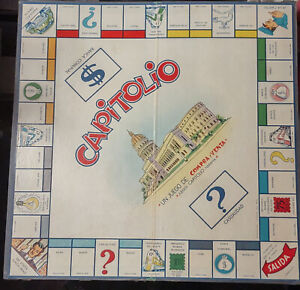
Rare Capitolio 1950s Cuban Monopoly knockoff board game, Habana/Havana history
SOLD $1,391.00 Sold: Oct 15, 2023 on eBayOriginal Listing Description
eBay Capitolio is a board game published in Havana, Cuba circa 1955 that's very similar to the U.S. real estate game Monopoly. Both boards consist of 40 spaces: 28 properties (22 streets arranged in 8 color groups, 4 railroads, and 2 utilities); 3 Chance (Casualidad) spaces, 3 Community Chest (Banca Comunal), 1 Luxury Tax (Impuesto Sobre Posesiones De Lujo), and 1 Income Tax (Impuesto Sobre Ingresos); and 4 corner squares: GO (Salida), Jail/Just Visiting (De Visita Nada Mas), Free Parking (Parqueo Gratis), and Go to Jail (A La Carcel). While Monopoly's street names are from Atlantic City, Capitolio's are from Havana. The game's name is derived from El Capitolio, the 1929 Cuban national capitol building, which is pictured on the board and box. The game was produced by Alberto Chia (aka Albert Chia Carbonell). The rules sheet states that he produced other games, including lotto games, Parchis, Spanish checkers, and Chinese checkers, and that more were in preparation. According to Cuban Ministry of Commerce bulletins in Google Books, he applied for the Capitolio trademark on 7/14/55, and the ownership certificate was issued 7/5/56. This game came to the U.S. on a 1960 Aerovias Q flight from Havana to Key West with its 13-year-old owner, whose name, Orlando, is written on the box. Alberto Chia emigrated to Miami on a 1962 Pan Am flight and died there in 1985.A Capitolio game sold on eBay earlier this year for $2,000 to a buyer who'd previously paid $180 for a game that was missing the money, hotels, and houses. According to the buyer, there are only three or four known "complete" games, counting mine (which I've learned is actually missing 4 of the 32 houses), and each of those is somewhat different. The deeds and cards are on very thin card stock, cut irregularly, with the print sometimes faint or off register.This auction is for the Capitolio board and the box of equipment and supplies. The board has wear on the edges and especially the corners. The box has one torn corner, and some writing and stains on the top. Apparently the box originally had more dividers for the pieces. In addition to the 28 deeds, 6 cylindrical wooden player tokens, all 12 red wooden hotels, 28 of the 32 green wooden houses, 2 tiny die, 16 Casualidad and 16 Banca Comunal cards (plus a duplicate of the Fee for Service one), it includes the following money: 39 $1, 40 $5, 40 $10, 30 $20, 30 $50, 30 $100, and 30 $500. If you'd like any additional photos, please don't hesitate to ask.On Oct-08-23 at 10:12:19 PDT, seller added the following is a board game published in Havana, Cuba circa 1955 that's very similar to the U.S. real estate game Monopoly. Both boards consist of 40 spaces: 28 properties (22 streets arranged in 8 color groups, 4 railroads, and 2 utilities); 3 Chance (Casualidad) spaces, 3 Community Chest (Banca Comunal), 1 Luxury Tax (Impuesto Sobre Posesiones De Lujo), and 1 Income Tax (Impuesto Sobre Ingresos); and 4 corner squares: GO (Salida), Jail/Just Visiting (De Visita Nada Mas), Free Parking (Parqueo Gratis), and Go to Jail (A La Carcel). While Monopoly's street names are from Atlantic City, Capitolio's are from Havana. The game's name is derived from El Capitolio, the 1929 Cuban national capitol building, which is pictured on the board and box. Fidel Castro reportedly ordered all Monopoly and Capitolio games destroyed after rising to power. https: www gct com community the inside scoop travel trivia game over : :text Prior 20to 201959 2C 20Monopoly 20had out 20of 20American 20capitalist 20ideals The game was produced by Alberto Chia (aka Albert Chia Carbonell). The rules sheet states that he produced other games, including lotto games, Parchis, Spanish checkers, and Chinese checkers, and that more were in preparation. According to Cuban Ministry of Commerce bulletins in Google Books, he applied for the Capitolio trademark on 7/14/55, and the ownership certificate was issued 7/5/56. This game came to the U.S. on a 1960 Aerovias Q flight from Havana to Key West with its 13-year-old owner, whose name, Orlando, is written on the box. Alberto Chia emigrated to Miami on a 1962 Pan Am flight and died there in 1985. A Capitolio game sold on eBay earlier this year for $2,000 to a buyer who'd previously paid $180 for a game that was missing the money, hotels, and houses. According to the buyer, there are only three or four known "complete" games, counting mine (which I've learned is actually missing 4 of the 32 houses), and each of those is somewhat different. The deeds and cards are on very thin card stock, cut irregularly, with the print sometimes faint or off register. This auction is for the Capitolio board and the box of equipment and supplies. The board has wear on the edges and especially the corners. The box has one torn corner, and some writing and stains on the top. Apparently the box originally had more dividers for the pieces. In addition to the 28 deeds, 6 cylindrical wooden player tokens, all 12 red wooden hotels, 28 of the 32 green wooden houses, 2 tiny die, 16 Casualidad and 16 Banca Comunal cards (plus a duplicate of the Fee for Service one), it includes the following money: 39 $1, 40 $5, 40 $10, 30 $20, 30 $50, 30 $100, and 30 $500. If you'd like any additional photos, please don't hesitate to ask. (Condition: Pre-Owned)
Note: This item has been sold and is no longer available. This page serves as a historical price reference for Board Game collectors and appraisers.
Original Listing Description
eBay Capitolio is a board game published in Havana, Cuba circa 1955 that's very similar to the U.S. real estate game Monopoly. Both boards consist of 40 spaces: 28 properties (22 streets arranged in 8 color groups, 4 railroads, and 2 utilities); 3 Chance (Casualidad) spaces, 3 Community Chest (Banca Comunal), 1 Luxury Tax (Impuesto Sobre Posesiones De Lujo), and 1 Income Tax (Impuesto Sobre Ingresos); and 4 corner squares: GO (Salida), Jail/Just Visiting (De Visita Nada Mas), Free Parking (Parqueo Gratis), and Go to Jail (A La Carcel). While Monopoly's street names are from Atlantic City, Capitolio's are from Havana. The game's name is derived from El Capitolio, the 1929 Cuban national capitol building, which is pictured on the board and box. The game was produced by Alberto Chia (aka Albert Chia Carbonell). The rules sheet states that he produced other games, including lotto games, Parchis, Spanish checkers, and Chinese checkers, and that more were in preparation. According to Cuban Ministry of Commerce bulletins in Google Books, he applied for the Capitolio trademark on 7/14/55, and the ownership certificate was issued 7/5/56. This game came to the U.S. on a 1960 Aerovias Q flight from Havana to Key West with its 13-year-old owner, whose name, Orlando, is written on the box. Alberto Chia emigrated to Miami on a 1962 Pan Am flight and died there in 1985.A Capitolio game sold on eBay earlier this year for $2,000 to a buyer who'd previously paid $180 for a game that was missing the money, hotels, and houses. According to the buyer, there are only three or four known "complete" games, counting mine (which I've learned is actually missing 4 of the 32 houses), and each of those is somewhat different. The deeds and cards are on very thin card stock, cut irregularly, with the print sometimes faint or off register.This auction is for the Capitolio board and the box of equipment and supplies. The board has wear on the edges and especially the corners. The box has one torn corner, and some writing and stains on the top. Apparently the box originally had more dividers for the pieces. In addition to the 28 deeds, 6 cylindrical wooden player tokens, all 12 red wooden hotels, 28 of the 32 green wooden houses, 2 tiny die, 16 Casualidad and 16 Banca Comunal cards (plus a duplicate of the Fee for Service one), it includes the following money: 39 $1, 40 $5, 40 $10, 30 $20, 30 $50, 30 $100, and 30 $500. If you'd like any additional photos, please don't hesitate to ask.On Oct-08-23 at 10:12:19 PDT, seller added the following is a board game published in Havana, Cuba circa 1955 that's very similar to the U.S. real estate game Monopoly. Both boards consist of 40 spaces: 28 properties (22 streets arranged in 8 color groups, 4 railroads, and 2 utilities); 3 Chance (Casualidad) spaces, 3 Community Chest (Banca Comunal), 1 Luxury Tax (Impuesto Sobre Posesiones De Lujo), and 1 Income Tax (Impuesto Sobre Ingresos); and 4 corner squares: GO (Salida), Jail/Just Visiting (De Visita Nada Mas), Free Parking (Parqueo Gratis), and Go to Jail (A La Carcel). While Monopoly's street names are from Atlantic City, Capitolio's are from Havana. The game's name is derived from El Capitolio, the 1929 Cuban national capitol building, which is pictured on the board and box. Fidel Castro reportedly ordered all Monopoly and Capitolio games destroyed after rising to power. https: www gct com community the inside scoop travel trivia game over : :text Prior 20to 201959 2C 20Monopoly 20had out 20of 20American 20capitalist 20ideals The game was produced by Alberto Chia (aka Albert Chia Carbonell). The rules sheet states that he produced other games, including lotto games, Parchis, Spanish checkers, and Chinese checkers, and that more were in preparation. According to Cuban Ministry of Commerce bulletins in Google Books, he applied for the Capitolio trademark on 7/14/55, and the ownership certificate was issued 7/5/56. This game came to the U.S. on a 1960 Aerovias Q flight from Havana to Key West with its 13-year-old owner, whose name, Orlando, is written on the box. Alberto Chia emigrated to Miami on a 1962 Pan Am flight and died there in 1985. A Capitolio game sold on eBay earlier this year for $2,000 to a buyer who'd previously paid $180 for a game that was missing the money, hotels, and houses. According to the buyer, there are only three or four known "complete" games, counting mine (which I've learned is actually missing 4 of the 32 houses), and each of those is somewhat different. The deeds and cards are on very thin card stock, cut irregularly, with the print sometimes faint or off register. This auction is for the Capitolio board and the box of equipment and supplies. The board has wear on the edges and especially the corners. The box has one torn corner, and some writing and stains on the top. Apparently the box originally had more dividers for the pieces. In addition to the 28 deeds, 6 cylindrical wooden player tokens, all 12 red wooden hotels, 28 of the 32 green wooden houses, 2 tiny die, 16 Casualidad and 16 Banca Comunal cards (plus a duplicate of the Fee for Service one), it includes the following money: 39 $1, 40 $5, 40 $10, 30 $20, 30 $50, 30 $100, and 30 $500. If you'd like any additional photos, please don't hesitate to ask. (Condition: Pre-Owned)
Note: This item has been sold and is no longer available. This page serves as a historical price reference for Board Game collectors and appraisers.